Many of our donors support projects that operate outside Aotearoa, or which operate within Aotearoa but aren’t registered charities. We’re able to facilitate these grants because of a special form of
due diligence that we conduct, called an ‘equivalency determination’.
An equivalency determination is a process where, when we make grants to international or unregistered organisations, we determine whether their structure and legal restrictions are equivalent to those imposed on New Zealand registered charities.
For example, when Jill Ford requested that we make a grant from her Feminista Fund to an organisation in Uganda called MUWOFA (the Mughende Women Farmers Association) , we had to determine that they were structured and regulated in a way equivalent to a New Zealand charity.
The first thing we check is whether their purposes align with one of the four legally charitable purposes in New Zealand, and whether their activities advance these purposes.
We found that MUWOFA advances education, through the training they provide in skills as diverse as beekeeping, carpentry, welding, and accounting – everything the modern farmer needs! We also found that they relieve poverty, through their savings and credit programmes, and are beneficial to the community through their work fighting domestic violence.
We also had to check that their benefit was to the public in their community, and that they weren’t a private profit- making entity. We confirmed this by checking their governing documents and financial statements, and checking their registration status with the local authorities in their area.
Finally, we signed an agreement with them, to confirm that any funds would be used appropriately, and to require a report. By using this process, we’ve been able to make grants from the Feminista Fund to support MUWOFA’s educational efforts in financial literacy, reproductive health, and climate-smart agriculture.
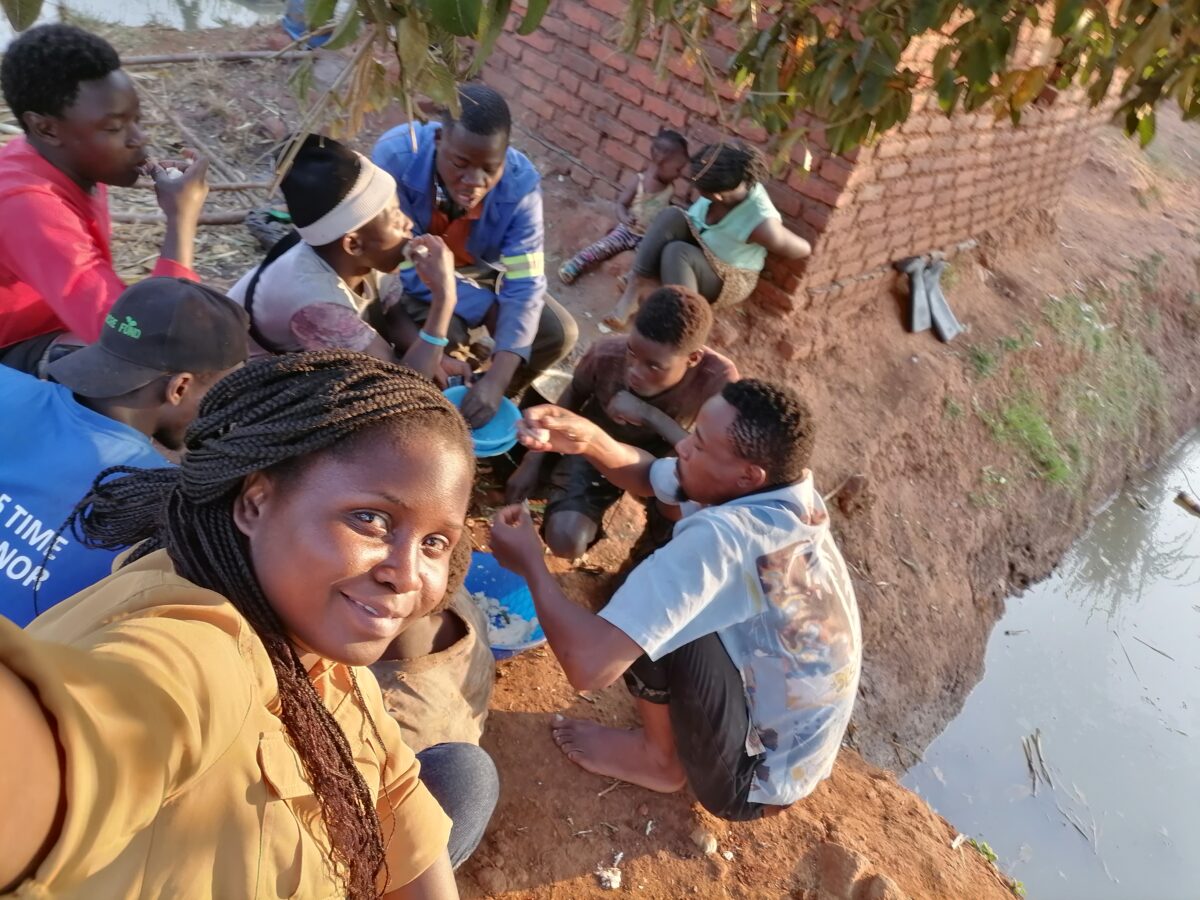
We employed a similar approach in a recent grant to an organisation in Malawi. Visiting there a few years ago, one of our donors came across Kwacha Kwayera Seedlings, a small women-led social enterprise growing not just vegetables and seedlings, but also the skills of local farmers. The profits from their market sales go into their horticulture education programmes, provided free of charge to young people in their community. Local chiefs identify young people for the project, and Kwacha Kwayera gives them training and space on their farm for their growing projects.
While the education programmes they run can be considered charitable under the New Zealand legal definition, as a social enterprise, Kwacha Kwayera wouldn’t typically be eligible for grant funding. However, by building up a trust-based relationship with them through our donor, we were able to ring-fence the funds solely for those programmes, meaning our donor could support them through their Gift Account. As a further safeguard, we receive regular reports from Kwacha Kwayera, ensuring the funds are being used as required.
While equivalency determinations are just one of the tools in our specialist granting toolkit, we’re always excited to do them, because they give us a chance to build a really close relationship with an organisation that’s doing a different kind of good. They also help reinforce our knowledge of what is and isn’t charitable, which helps us stay compliant overall.
