
In the course of our work at The Gift Trust, we do a lot of reading, a lot of connecting, and a lot of listening to not-for-profit groups who are achieving incredible things in our communities. At times we learn things that surprise us, and today we’d like to share a few of them with you.
There are some instances when legislation and regulations around young people seem a little naïve, and assume that every young person is raised by a family who is able to support them financially and emotionally. That’s something most of us know is, unfortunately, not the case.
#1: Tenancy agreements signed by under-18s aren’t enforceable.
Naturally, this means that landlords tend to avoid renting to young people. A tenancy agreement can be co-signed by a parent, but that would depend on having a parent who supports their child in the occupancy of their new home. There are times when young people leave home for their own safety or mental wellbeing, and this system creates more complications for them at an already tough time.
The other ‘catch-22’ of this situation is that a person can’t receive a benefit if they don’t have a postal address. So much for ‘getting on your feet’!
Thanks to E Tipu E Rea for this information, and for the outstanding work they do supporting young people and their families through all aspects of their lives.
#2: Under-16s don’t qualify for benefits.
In a perfect world, under-16s wouldn’t become parents, and everyone would have enough to eat, but life happens, and there are 14- and 15-year-olds who become young mothers. These girls don’t qualify for Work and Income’s Young parent payments or Youth payments because our benefit system assumes that these young mums (due to their age) would be supported at home by their own parents.
But if home is not a safe place for them to be, they’re placed in situations that are often dangerous, both for them and their child. One school that supports young parents told us that several of their young mothers were living in tents with their babies, and some had their babies removed by Oranga Tamariki because of this. Sanctions are also a problem; some young mothers over 16 innocently tell Work and Income they have a partner, and both they and their boyfriend lose half of their benefit.
In addition to these financial pressures, many schools insist young mothers wear full school uniform throughout their pregnancy, requiring the purchase of several sets to fit the range of sizes needed. The team at ATPENZ (the Association of Teen Parent Educators NZ ) advocate for young mothers to wear a school sweatshirt and dark trousers throughout their pregnancy and recovery, to avoid this additional cost.
Thanks to ATPENZ for this information, and for their hard work to make this complicated time easier for young families.
Recently, The Gift Trust has been engaging in research into various aspects of disability for our donors and other philanthropic trusts and we learned some incredible things to do with the marginalisation of people living with disabilities, and the impact that funding can have.
#3: Spina bifida is a disappearing disability.
Thanks to the advocacy of organisations like Rare Disorders NZ, folic acid has been enriching a number of food staples in Aotearoa for a number of years. Its presence in such products as flour, bread, and cereals, ensures that its absence during the crucial first six weeks of pregnancy is far less likely, dramatically reducing the incidence of spina bifida.
But what is it like to live with a disability that is so fast disappearing? Disability activism organisation The D* List is planning to look into this, bringing together people with spina bifida to write, film and produce a series of short films discussing this experience.
#4: Tagged disability funding can create a hierarchy of need.
A lot of funding for disability is specific to a particular disability, but a lot of disabled community initiatives are pan-disability. This creates a hierarchy that we were astonished we hadn’t thought of before, until the Halberg Foundation walked us through it. This hierarchy creates an environment where young people with one particular medical condition receive funding to (for example) attend the Halberg Games in Auckland, while young people with a different condition don’t. In a community that has been marginalised for so long, this could create internal marginalisation.
#5: Three organisations, one mission, very similar names!
We often come across organisations with similar names, but different approaches, and we’ve recently found a perfect example of this – three groups with the words ‘Predator Free’ in their name, but with different ways of addressing their mission:
- Predator Free NZ Trust – a national registered charity that provides storytelling, advocacy, equipment and resources to grassroots groups working in the predator free movement.
- Predator Free Wellington – a collective of 58 trapping groups across the Wellington area.
- Predator Free 2050 Limited – a Crown-owned charitable company established to help deliver the New Zealand government’s goal of eradicating possums, stoats and rats by the year 2050.
#6: There’s a Toyota Starlet parked underwater in Mahanga Bay.
And ending the blog with a bit of a laugh, the team at Ghost Diving NZ told us about this unusual piece of parking off the coast of Mahanga Bay, one bay around from Scorching Bay on the Miramar Peninsula in Wellington.
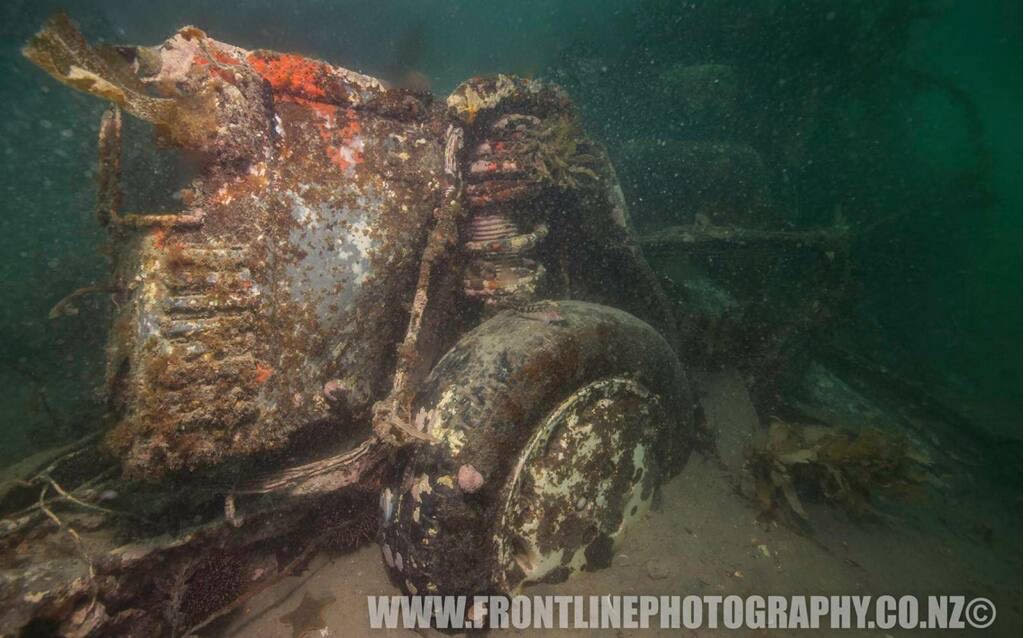
Currently home to a very large eel, this badly deteriorated car is a marker for divers to indicate they’ve reached Mahanga Bay, where they often park their cars.
Thanks to Ghost Diving NZ for the story and photo – they’re a group of amazing divers whose mission is to clear our coastal waters of dumped fishing gear, debris, and rubbish.
